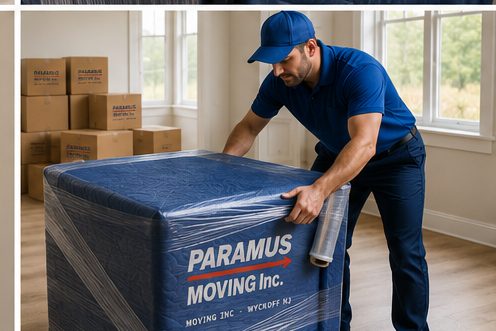
Picture the first night in the new house. The truck is unloaded, eighty sealed boxes stand in neat stacks, and somewhere inside them are the toilet paper, your phone charger, and the coffee maker. Nobody knows which boxes. This is the problem the essentials box exists to solve: one clearly marked box—sometimes two or three—holding everything the first night and morning require, packed last and opened first.
Why it rides in your car, not the truck
Trucks are loaded by geometry, not by what you’ll want first—the crew builds tiers that ride safely, which means your essentials box could end up behind the sofa and under the mattresses. If it’s on the truck at all, it’s effectively unreachable until unloading is well along, and you’ll want its contents before then.
So the essentials box travels in your own vehicle, along with the other things that should never ride the truck: medications, important documents, jewelry, laptops, and irreplaceable valuables. (Movers decline certain items as a matter of policy—our non-allowables page has the full list.) Keeping one box out of the load costs nothing; digging through a loaded truck at nine at night costs plenty.
The core list
Bathroom: toilet paper, hand soap, a towel per person, toothbrushes and toothpaste, and—the veteran move—a shower curtain with rings. There are few bleaker discoveries than a first-morning shower with no curtain.
Kitchen: paper plates and cups, plastic utensils, paper towels, a sponge and dish soap, snacks, bottled water, and the coffee setup, whatever yours is. Add a sleeve of trash bags; new houses generate trash immediately and own no cans yet.
Bedroom: a set of sheets and a blanket per bed, pillows if they fit (a garbage bag of pillows riding in the back seat is fine), pajamas, and a full change of clothes per person.
The practical kit: box cutter—you will use it fifty times—plus a screwdriver, flashlight, batteries, phone chargers, a small first-aid kit, all household medications, spare glasses, keys, and a basic cleaner. Add a night-light for anyone likely to be wandering unfamiliar hallways at 2 a.m.
Kids and pets get their own additions
For children, the essentials box is half logistics, half comfort: the stuffed animal that cannot be lost, a favorite blanket, a couple of books or small toys, the tablet and its charger, and familiar snacks. Let each kid pack a small backpack of their own choices—it gives them a job and a bit of control on a day that’s chaotic for them too.
Pets need their food and bowls, leash or carrier, litter and box for cats, any medications, and something that smells like home. Moving day itself is the risky window for pets—doors stand open for hours—so plan for them to spend it in a closed, labeled room or with a friend, with their supplies staying wherever they are.
Pack it last, mark it loud, stage it apart
The essentials box gets packed on the final morning, because half its contents are in use until then. Label it boldly on every side—ESSENTIALS—DO NOT LOAD—and stage it away from the box stacks: in your car’s trunk early, or in a closed closet with a sign on the door. A perfectly packed essentials box that gets swept onto the truck with everything else has failed at its one job, so make it impossible to mistake.
Keep a mirror-image kit at the old house, too: a roll of paper towels, a spray cleaner, a broom, and a few trash bags that stay out until the very end. You’ll want them for the final wipe-down and walkthrough after the truck is loaded, and they can ride to the new house loose in the car with everything else.
It’s a small bit of planning that changes the whole first night—from camping in a warehouse to something like living in your new home. You’ll find it as a line item on our moving checklist, alongside everything else with a right time to do it. And if the rest of the packing is the part you dread, that’s a conversation for your free written estimate—the essentials box is the one box we’d tell you to pack yourself no matter what.
Moving in Bergen County? Free written estimate — in person or by video.
Get my free estimate Call (201) 652-5554