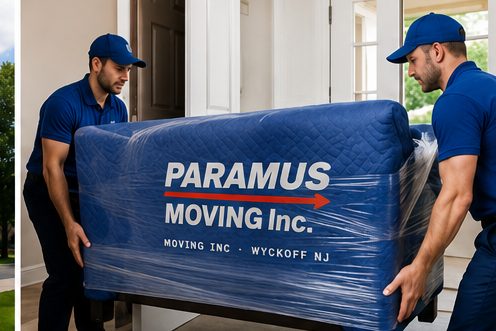
The kitchen is usually the smallest room in the house and somehow produces the most boxes. It’s also where most breakage happens, and for good reason: nearly everything in it is fragile, heavy, or oddly shaped, and you keep using it right up until the last morning. The kitchen rewards a slow, methodical approach more than any other room—so give it one.
Plan it first, finish it last
The kitchen should be the last room you finish and the first one you plan. Weeks before the move, pack everything you won’t touch: the turkey roaster, the wedding china, the vases, the waffle iron, the serving platters. That’s often half the kitchen gone before it hurts.
Keep a skeleton kitchen in one cabinet for the final stretch—a plate, bowl, mug, and fork per person, one pan, one pot, and the coffee maker. Those get packed the last morning or ride with you in the car. Meanwhile, start eating down the pantry and the freezer now; open food and perishables shouldn’t go on the truck anyway.
Dishes travel on edge, never flat
Use a dish pack—a double-walled box built for exactly this job—and start with a solid three inches of crumpled packing paper on the bottom. Wrap each plate in two or three sheets of paper, then stand them on edge, like records in a crate, with paper between them.
This is the single change that saves the most dishes. A flat stack of plates concentrates every bump on the whole pile at once; plates standing on edge are surprisingly strong and absorb road shock instead of transferring it. Pack rows snugly, pad the gaps, and finish with another layer of paper up top. Nothing should touch bare cardboard, and nothing should shift in the shake test.
Glasses and stemware need cells
Cardboard cell dividers—the honeycomb inserts sold with dish packs—are worth every penny for glassware. Stuff each glass with crumpled paper, then wrap it, then set it in its own cell. Heaviest glasses and mugs go in the bottom layer; stemware goes on top, wrapped stem-first so the fragile part gets the most padding.
Never nest unwrapped glasses inside each other, and never let two pieces of glass touch. Mark the box on all four sides: fragile, glasses, this end up. A box that gets flipped in a garage six weeks from now can undo everything you did today.
Small appliances, knives, and the awkward stuff
Original boxes with their molded foam are gold—if you kept them, use them. Otherwise, a medium box works: wrap the appliance in paper, coil the cord and tape or rubber-band it to the body, and pad the box so nothing shifts. Remove anything that detaches—blender blades, glass carafes, food-processor bowls—and wrap each piece separately.
Pots, pans, and bakeware are the easy win of the kitchen: nest them with a sheet of paper between each piece so nonstick surfaces don’t scratch, wrap the glass lids separately, and let a stack of nested pots fill the bottom of a medium box with lighter items above. Cast iron goes in small boxes only—two skillets and a Dutch oven will hit the weight limit on their own. Unopened dry goods and canned food can move, but cans are dense, so treat them like books: small boxes, and not many per box.
Knives deserve special care for everyone’s sake. Wrap them in a dish towel, secure it with tape or a rubber band, wrap that bundle in paper, and write KNIVES on it. The person who opens that box will be glad you did, and so will whoever carries it.
One last sweep before you tape the final box: check for the things that can’t go on the truck at all—half-open bottles of oil and liquor, aerosol cans, propane for the grill, and anything perishable. Our non-allowables list covers what movers can’t take and what to do with it instead.
If reading all of this makes you want to close the cabinet doors and walk away, you’re not alone—kitchens are the room people most often hand off to our packing crew. Either way, start with a free written estimate and know exactly what you’re dealing with before the boxes come out.
Moving in Bergen County? Free written estimate — in person or by video.
Get my free estimate Call (201) 652-5554